The autumn reset: a six-minute day to get back on track
Empty your head, choose three things, close the day. A small daily routine for when the September fresh start didn’t quite happen.
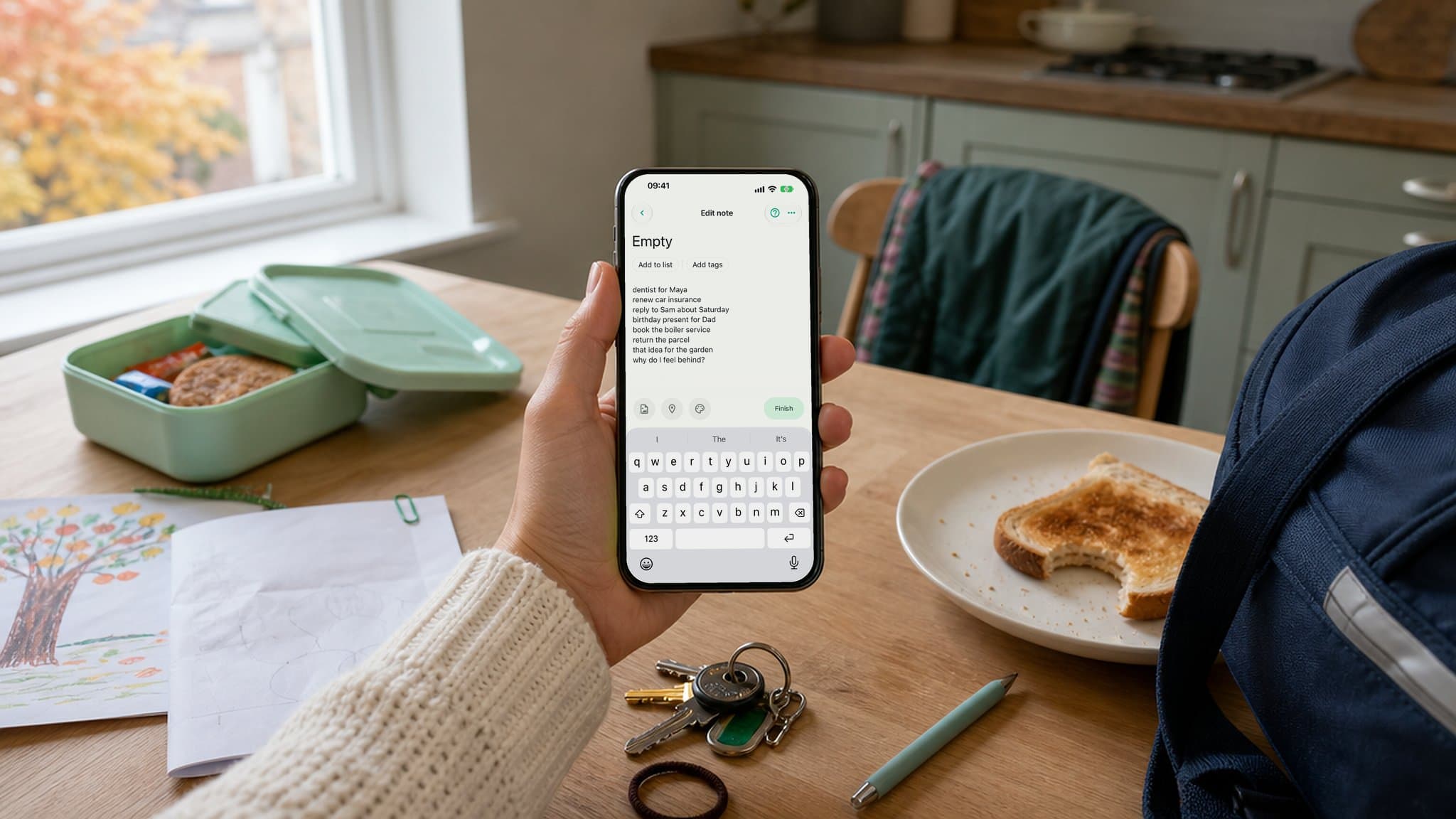
It’s the end of October. September was meant to be the fresh start: new notebook, new routine, everything back on track. If it didn’t quite happen, you’re in good company, and you don’t need to wait for January to try again.
Most autumn reset advice asks for a lot: a new morning routine, a new planner, a list of goals for the rest of the year. This one asks for six minutes a day, in three beats. Empty your head in the morning, choose what today is for, and close the day in the evening.
We call it the six-minute day. And if you only take one thing from this post, take this: the recovery isn’t starting again in January. It’s doing one close, tonight, on the day you’re already having.
Why most autumn resets don’t stick
A reset usually fails for one of two reasons.
It’s too big. It’s easy to restart everything at once, on a Monday, with eleven goals. By Thursday one of them slips, then the whole thing feels broken, and it gets parked until the next fresh start.
It only covers the start of the day. Morning routines, planners and to-do lists are all about beginning. Very little of it tells you what to do at six in the evening, when half the list is still there and you can’t tell whether today went well or badly.
Most systems tell you how to start a day. Almost none tell you how to finish one. The six-minute day gives the ending as much weight as the beginning, and keeps every part small enough to survive a bad week.
The six-minute day at a glance
| Beat | When | How long | What you do |
|---|---|---|---|
| Empty | Morning | 2 minutes | Get everything out of your head, unsorted |
| Choose | Straight after | 1 minute | Pick three things for today, not eleven |
| Close | Evening | 3 minutes | Look at what moved, and decide what’s carrying over |
That’s it. No new app to learn on day one, no colour coding, no weekly review to fall behind on. You can do all three with a pen and the back of an envelope.
Empty: get it out of your head
Set a timer for two minutes and write down everything that’s on your mind. The dentist appointment, the parcel to return, the email you’ve been avoiding, the vague worry about Christmas. Write it as it comes, one line each, and don’t sort it.
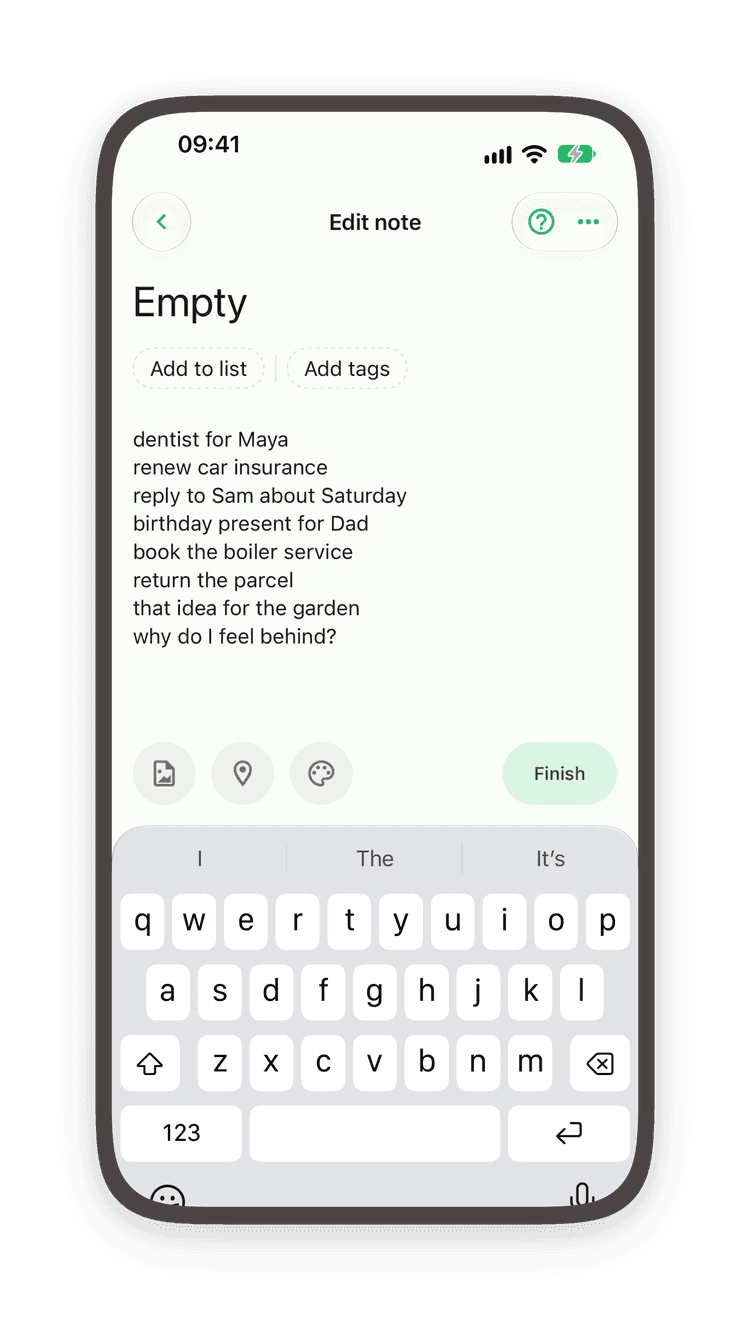
A morning’s Empty note might look like this:
- dentist for Maya
- renew car insurance
- reply to Sam about Saturday
- birthday present for Dad
- book the boiler service
- return the parcel
- that idea for the garden
- why do I feel behind?
It’s messy, and it’s meant to be. Sorting comes next. Emptying is only about getting it out of your head and onto something you trust.
There’s good evidence that this helps. In a set of studies on unfinished tasks, psychologists E.J. Masicampo and Roy Baumeister found that open goals kept intruding on people’s thoughts and dragged down their performance on unrelated work, and that making a plan for those goals took the intrusions away. You don’t have to finish everything to stop thinking about it. You just have to know where it is and when you’ll deal with it.
Choose: three things, not eleven
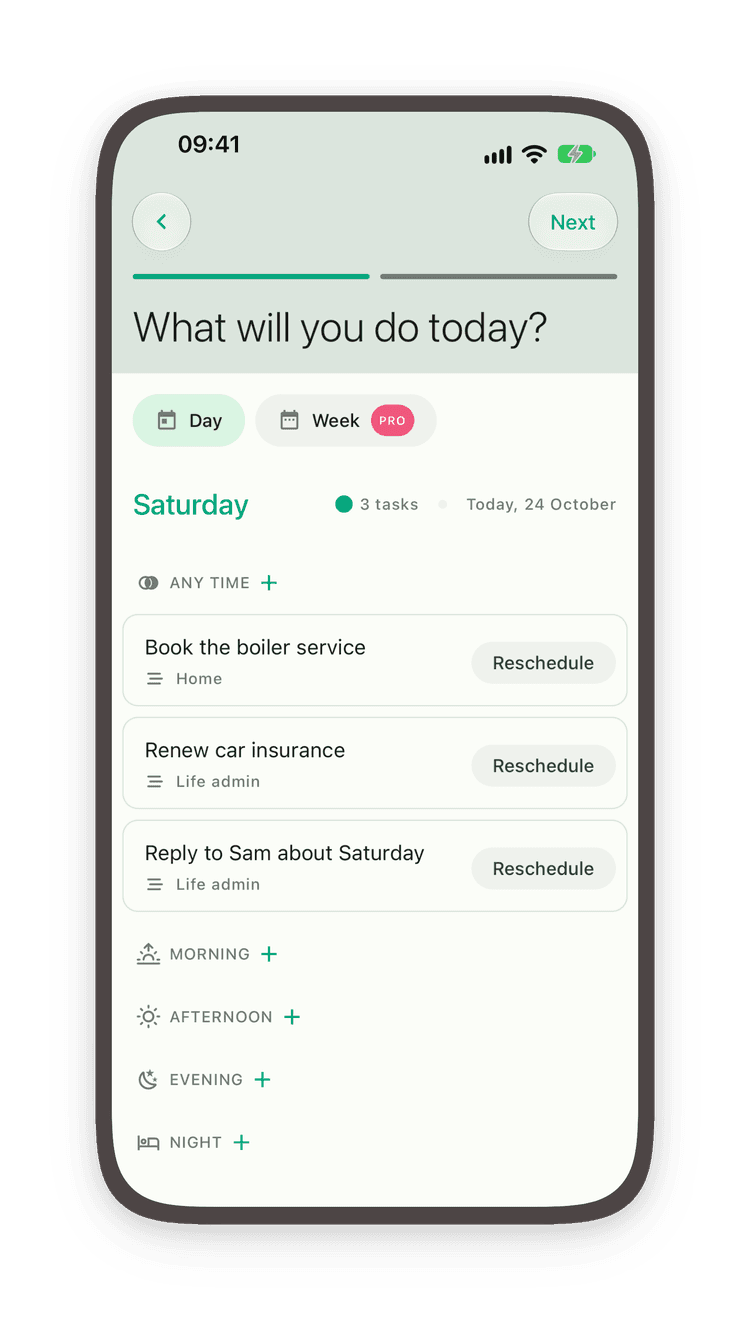
With everything out of your head, take one minute to choose three things today is for. Work from your Empty list and ask which three would make today feel like it counted. Usually that’s one thing that’s due, one that’s been nagging you, and one that moves something bigger along.
Three is deliberate. It’s few enough that you can actually finish them, and enough that the day doesn’t feel wasted if that’s all you do.
Everything else stays on the list. That’s a decision, not a failure: you’ve looked at it and decided it isn’t today’s. That’s very different from it lurking in the back of your mind.
If you want to go further with planning the day itself, our guide on how to plan your day effectively covers time blocking and more.
Close: finish the day on purpose
In the evening, take three minutes to close the day. This is the beat most systems leave out, and it’s the one that makes a reset last.
Ask yourself three things:
- What moved? Look at your three. Which did you finish, and what else got done that wasn’t on the list?
- What’s carrying over? For anything unfinished, decide now: tomorrow, later this week, or off the list for good.
- How did today feel? One word is enough. Over a few weeks, those words tell you more than any to-do list.
A close works like a gentle end of day routine: it draws a line under work and home alike, so tomorrow starts from a decision rather than a pile.
It also pays off. In a Harvard Business School study, call-centre trainees who spent the last 15 minutes of each day writing about what they’d learnt performed around 23% better on their final assessment than those who didn’t. We wrote more about that habit in the power of daily reflection.
When it wobbles
Some days you’ll skip the Empty. Some evenings you’ll be asleep on the sofa by nine. That isn’t the routine failing; it’s the routine meeting real life.
The fix is never to start again from scratch. Don’t wait for Monday. Do one close, tonight, on whatever kind of day you’ve had. Look at what moved and what’s carrying over, and you’re back in. Tomorrow’s Empty will pick up the rest.
Doing it in Do Everything
You can run the six-minute day on paper, but it’s easier when all three beats live in one place on your phone. Do Everything is built around planning the day and reflecting on it, so each beat has a home.
- Empty goes in a note. Start one in Notes and keep adding to it. When you plan, you pick from it by hand, as there’s no note-to-task button yet.
- Choose is Plan your day, on the Today screen. It asks what you’ll do today and lets you pick tasks from your lists: choose three, and skip any later step you don’t need.
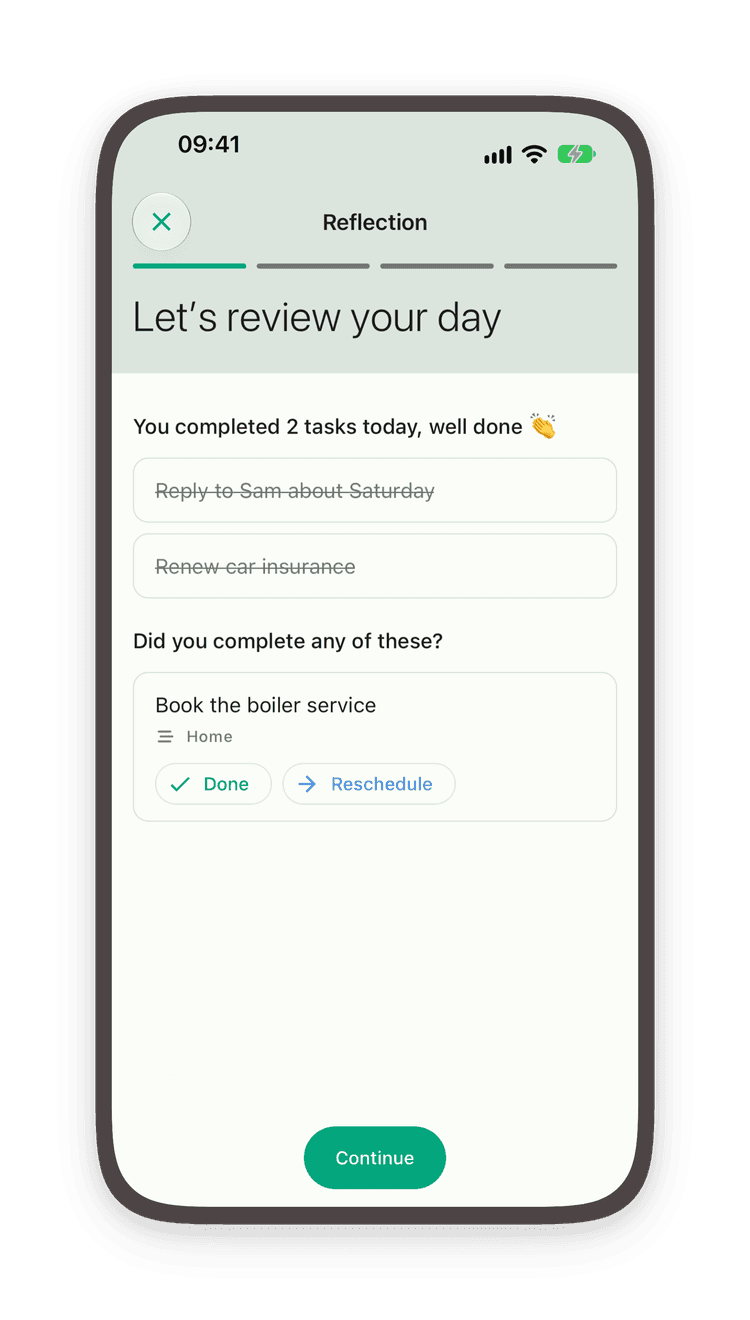
- Close is Reflect on your day, which sits beside it on the Today screen. It shows what you got done, lets you mark the rest as done or reschedule it, and then asks how you’re feeling, what you’re grateful for, and anything else you want to write.
Reflection is in the iOS and Android apps for now. The web app at my.doeverything.app handles notes and planning, and reflection is coming soon. If you’d like a nudge to close the day, switch on the 8 PM reflection reminder in Settings, under Notifications. It’s off until you turn it on.
Do Everything is free on iOS and Android, and the download links are just below.
Autumn reset FAQ
What is an autumn reset?
An autumn reset is a deliberate restart of your routine as the days shorten, usually after the summer holidays have thrown things off. The version in this post is a daily one: six minutes split between emptying your head, choosing three things and closing the day.
Is it too late for an autumn reset in November?
No. The six-minute day doesn’t need a fresh start, a Monday or a new month. You can begin with one close this evening, and do the first Empty tomorrow morning.
Is a fall reset any different?
Only in the name. “Fall reset” is the American term for the same idea, and the six-minute day works the same way wherever you are.

